

After months of snow, ice, and freezing temperatures, your windows accumulate layers of dirt, salt spray, and mineral deposits that obscure natural light and detract from curb appeal. A complete spring window cleaning checklist should include inspecting glass surfaces, frames, screens, gutters, and siding to identify damage and restore clarity. Professional cleaning removes winter buildup that household cleaners cannot dissolve, protects your investment, and prepares your home for the warmer months ahead.
Why Minnesota Winters Are Particularly Hard on Windows
Minnesota winters subject windows to extreme freeze-thaw cycles that cause contaminants to bond tightly to glass. Road salt and de-icing chemicals blown by wind create a stubborn film that standard cleaning methods struggle to remove. Ice dams force moisture into window frames, where it can freeze and expand, creating stress cracks or seal failures. Homes in Coon Rapids and surrounding areas face these conditions for four to five months each year, making spring restoration essential rather than optional.
Temperature swings between -20°F and 40°F cause expansion and contraction that can compromise weatherstripping and caulking. When these seals fail, condensation forms between panes in double-glazed units, creating permanent cloudiness that requires glass replacement. Addressing these issues early prevents small problems from becoming expensive repairs.
Inspecting Window Glass for Winter Damage
Begin your inspection by examining each pane for cracks, chips, or stress fractures that may have developed during cold snaps. Look closely at corners and edges where impact damage typically starts. Check for condensation or fogging between double-pane glass, which indicates seal failure and lost insulating value. These damaged units cannot be cleaned back to clarity and need professional replacement to restore energy efficiency.
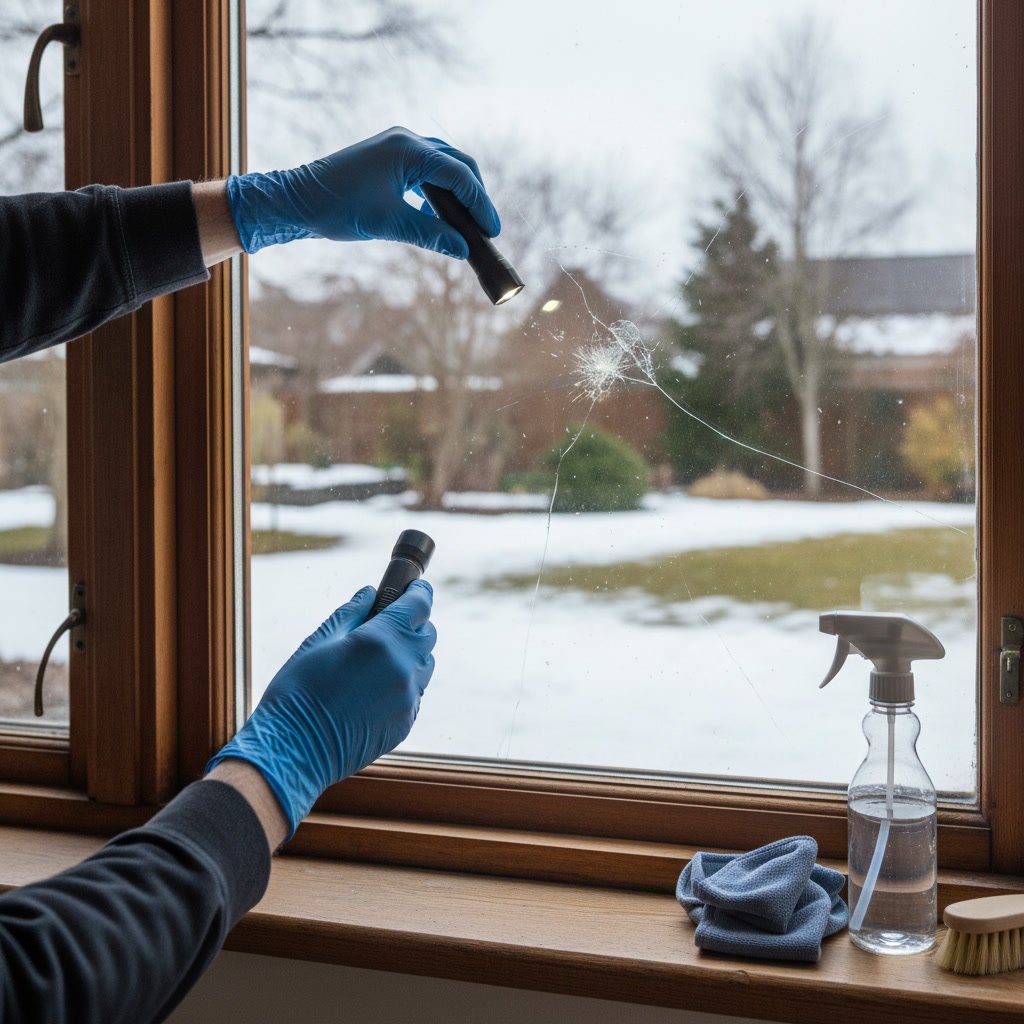
Mineral deposits from melting snow and ice often appear as white or chalky streaks that resist standard glass cleaners. Hard water spots require acidic solutions or professional-grade products to dissolve completely. Ignoring these deposits allows them to etch glass permanently over time, creating a rough surface that attracts dirt faster.
Checking Frames, Sills, and Weatherstripping
Window frames and sills trap moisture, dirt, and organic debris throughout winter. Wood frames may show signs of rot or paint failure where water has penetrated. Vinyl frames can become brittle and crack after prolonged exposure to cold. Metal frames sometimes develop corrosion or mineral buildup at drainage holes.
Run your hand along weatherstripping to feel for brittleness, gaps, or separation from the frame. Damaged weatherstripping allows air infiltration that drives up heating and cooling costs. Check that all drainage holes (weep holes) at the bottom of exterior frames are clear, allowing trapped water to escape rather than pooling and causing damage.
Addressing Screen Damage and Deep Cleaning
Window screens accumulate dust, pollen, and debris even during winter storage. Screens left in place through cold months often develop tears, loose frames, or bent corners from ice and snow pressure. Remove each screen and inspect the mesh for holes, the frame for integrity, and the mounting hardware for rust or damage.
Deep cleaning screens requires more than a quick rinse. Professional screen cleaning removes embedded particles that block airflow and reduce visibility, extending the life of your screens and improving indoor air quality when windows are open.
Evaluating Gutters and Downspouts in Coon Rapids
Gutters choked with leaves, shingle granules, and ice debris prevent proper drainage during spring rains. Water overflowing from clogged gutters streams down exterior walls and windows, leaving stains and encouraging mold growth. Ice dams that formed during winter may have pushed gutters away from fascia boards or created hidden leaks at seams.
Clean gutters before tackling windows to prevent dirty water from undoing your window cleaning work. Professional gutter cleaning removes compacted debris that homeowners often miss, ensures proper pitch for drainage, and identifies damage that needs repair before it worsens.

Tackling Exterior Surfaces with Soft Washing
Siding, trim, and overhangs collect algae, mildew, and dirt throughout winter that household pressure washers can damage if used incorrectly. High-pressure water can force moisture behind siding, strip paint, or crack brittle vinyl. Understanding the difference between cleaning methods protects your investment while achieving superior results.
Soft washing uses low-pressure application of specialized cleaning solutions that break down organic growth and lift stains without surface damage. This method is particularly effective on vinyl siding, painted surfaces, and delicate trim. For a detailed comparison of techniques, refer to our guide on soft washing versus pressure washing for home exteriors.
Creating Your Room-by-Room Cleaning Plan
Organize your cleaning schedule by starting with the least accessible windows first, typically second-story or hard-to-reach units. This prevents you from re-soiling already-cleaned areas when moving ladders or equipment. Work in moderate temperatures between 50°F and 75°F when cleaning solutions perform best and dry without streaking.
For each room, follow this sequence: remove screens, vacuum frames and sills, clean exterior glass, clean interior glass, wash screens, inspect and replace weatherstripping if needed, and reinstall screens. Keep a checklist to track completed rooms and identify any that need professional attention for damage or stubborn staining.
Professional Cleaning versus DIY Efforts
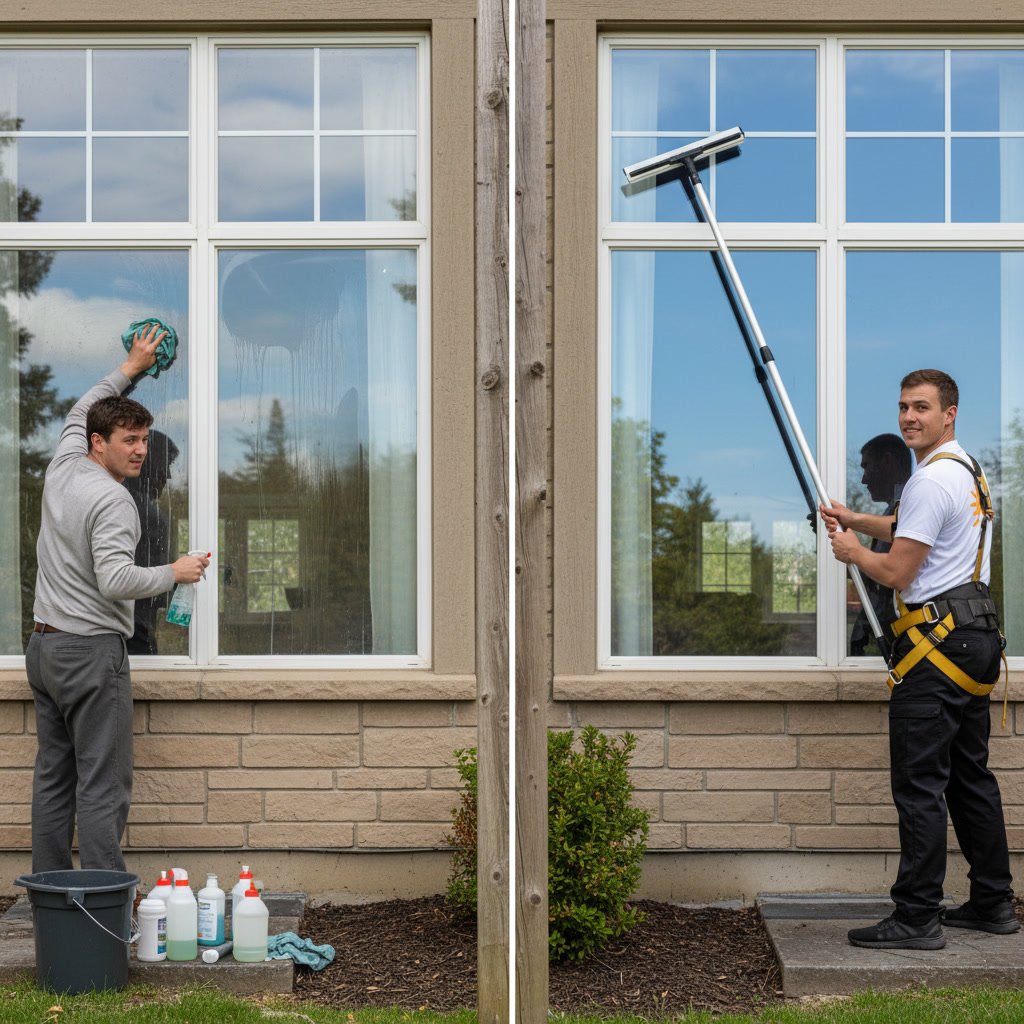
Homeowners can handle basic window cleaning with proper tools and techniques, but certain situations demand professional expertise. Second-story windows, large picture windows, and skylights pose safety risks that professionals manage with proper equipment and insurance. Stubborn mineral deposits, hard water stains, and construction residue often require commercial-grade products not available to consumers.
Professional residential window cleaning services complete the work in hours rather than days, use purified water systems that prevent spotting, and guarantee streak-free results. Licensed and insured technicians identify potential problems during cleaning, alerting you to seal failures, frame damage, or safety hazards before they escalate.
Safety Considerations for Multi-Story Homes
Extension ladders require three points of contact, stable footing on level ground, and someone to spot you during use. Even experienced homeowners misjudge ladder angles or fail to secure the base properly, leading to falls that cause serious injury. Working above six feet dramatically increases risk, particularly on damp surfaces or when reaching beyond your center of balance.
Professional window cleaners use fall-protection equipment, stabilizer bars that prevent ladder damage to gutters and siding, and extension poles that eliminate the need to climb for many applications. The cost of professional service is modest compared to emergency room bills or property damage from ladder accidents.
Timing Your Spring Cleaning for Best Results
Schedule exterior cleaning after the last frost but before pollen season peaks, typically mid-April through early May in Minnesota. This timing allows you to address winter damage before spring storms arrive and before trees release heavy pollen that coats fresh-cleaned surfaces. Avoid cleaning in direct sunlight, which causes solutions to dry too quickly and leave streaks.
Interior windows can be cleaned year-round, but spring is ideal because increased natural light from clean glass lifts mood and reduces reliance on artificial lighting. Combining interior and exterior cleaning in a single project maximizes the visual impact and ensures consistent results on both sides of each pane.
Protecting Your Investment Through the Season
Once your windows are restored, maintain them with monthly inspections and spot cleaning as needed. Address bird droppings, tree sap, and insect debris promptly, as these contaminants become harder to remove the longer they remain. Keep drainage holes clear throughout the season to prevent water damage during spring and summer storms.
Consider applying a glass treatment that repels water and reduces mineral buildup, extending the time between deep cleanings. Professional services can apply these coatings as part of their process, providing months of easier maintenance and clearer views.
Spring cleaning addresses the accumulated effects of Minnesota’s harsh winters and prepares your home for the active months ahead. By systematically inspecting glass, frames, screens, gutters, and exterior surfaces, you protect your investment and enjoy improved curb appeal and natural light. Whether you tackle the work yourself or engage professionals depends on your comfort with heights, available time, and the condition of your windows after winter.
At Reveal Window Washing, we help homeowners throughout the region restore their homes after winter with thorough, professional care. From window and screen cleaning to gutters and exterior surfaces, our team brings the tools, expertise, and attention to detail that make every project a success. If you’re ready to reveal the true beauty of your home this spring, reach out to our team at +12185371577 to schedule your service.